


bpv_158440 - CARACALLA Tétradrachme syro-phénicien

No disponible.
Artículo vendido en nuestra tienda (2014)
Precio : 480.00 €
Artículo vendido en nuestra tienda (2014)
Precio : 480.00 €
Tipo : Tétradrachme syro-phénicien
Fecha: 215-217
Nombre del taller / ciudad: Zeugma, Syrie, Commagène
Metal: vellón
Diámetro: 26,5 mm
Eje de acuñación: 12 h.
Peso: 14,04 g.
Grado de rareza: R1
Comentarios sobre el estado de conservación:
Belle frappe complète, aucune trace d’usure, belles surfaces
N° en los catálogos de referencia :
Pedigrí:
Cet exemplaire est le 0812_009 de la base TSP
Anverso
Descripción del anverso: Tête laurée de Caracalla à droite (O*01), vue de trois-quarts en arrière.
Leyenda del anverso: AUT K. M. A.- .ANTWNEINO-S. SEB. (Autokrator Kaisar Markos Aurhlios Antwneinos Sebastos)
Traducción del anverso: (L’empereur césar Marc Aurèle Antonin auguste).
Reverso
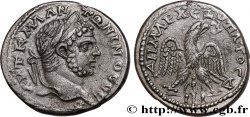
Descripción del reverso: Aigle debout de face sur une ligne de terre, les ailes déployées, la tête et queue à droite, tenant dans son bec une couronne perlée, les trois lettres initiales du nom de la ville dans le champ, le Z au-dessus de l’épaule gauche, le E au-dessus de l’épaule droite et le V entre les pattes.
Leyenda del reverso: D.HMARC E.X. UPATO .D., (Dhmarcikhs Ex Ousias Upatos D)
Traducción del reverso: (Revêtu de la puissance tribunitienne consul pour la quatrième fois).
Comentario
Définitivement romaine depuis le règne de Vespasien, Zeugma, fondée par Séleucus Ier était une halte pour les caravanes venant d’Orient, située sur la rive opposée d’Apamée de l’Euphrate. La quatrième Légion Scythica y était cantonnée. Elle est aujourd’hui noyée sous les eaux par un barrage hydro-électrique.
Les émissions de Zeugma ne posent aucune difficulté d’attribution puisqu’elles portent, même si ce ne sont que par les trois lettres initiales, le nom de la ville.
Il n’est pas connu de frappe inaugurale pour cette série, avec un motif propre à la ville occupant tout le revers à la place de l’aigle et nous restons donc sans information sur la divinité tutélaire qu’auraient pu invoquer les habitants de Zeugma.
Le problème que posent ces émissions est plutôt à chercher dans l’absence de frappes attribuées à la ville d’Apamée, bien plus riche et puissante, de l’autre côté du fleuve Euphrate par rapport à Zeugma.
Quelque soit le motif que nous décidions de choisir pour expliquer l’ouverture d’une trentaine d’ateliers pendant la grande guerre parthique de Caracalla, tous auraient dû mener à des frappes d’Apamée si Zeugma a frappé.
Taxe pour le trésor militaire, exaltation politique des fiertés municipales et religieuses locales, aucune raison de ne pas voir de frappes à Apamée (comme d’ailleurs à Samosate, autre grande voisine).
Mauvaise attribution d’une série connue qu’il faudrait rendre à cette ville ou règlement de la taxe pour le Trésor militaire en lingots et non en monnaies frappées localement, les deux hypothèses sont valables.
On note que les sigma sont gravés en C.
Dans la base TSP maintenue par Michel Prieur, trente-et-un exemplaires sont maintenant répertoriés dont six en musées Paris (3), British Museum, Oxford et Gaziantep.
Definitively Roman since the reign of Vespasian, Zeugma, founded by Seleucus I, was a stopping place for caravans coming from the East, located on the opposite bank of the Euphrates from Apamea.. The Fourth Scythica Legion was stationed there. Today it is submerged under water by a hydroelectric dam..
The Zeugma emissions do not pose any difficulty in attribution since they bear, even if only by the three initial letters, the name of the city.
There is no known inaugural strike for this series, with a motif specific to the city occupying the entire reverse instead of the eagle, and we therefore remain without information on the tutelary deity that the inhabitants of Zeugma could have invoked..
The problem with these emissions is rather to be found in the absence of strikes attributed to the city of Apamea, much richer and more powerful, on the other side of the Euphrates River from Zeugma..
Whatever motive we decide to choose to explain the opening of some thirty workshops during Caracalla's great Parthian war, all of them should have led to strikes from Apamea if Zeugma struck..
Tax for the military treasury, political exaltation of local municipal and religious pride, no reason not to see strikes in Apamea (as indeed in Samosata, another large neighbor).
Wrong attribution of a known series that should be returned to this city or payment of the tax for the military treasury in ingots and not in locally minted coins, both hypotheses are valid.
Note that the sigmas are engraved in C.
In the TSP database maintained by Michel Prieur, thirty-one examples are now listed, including six in museums in Paris (3), the British Museum, Oxford and Gaziantep.
Les émissions de Zeugma ne posent aucune difficulté d’attribution puisqu’elles portent, même si ce ne sont que par les trois lettres initiales, le nom de la ville.
Il n’est pas connu de frappe inaugurale pour cette série, avec un motif propre à la ville occupant tout le revers à la place de l’aigle et nous restons donc sans information sur la divinité tutélaire qu’auraient pu invoquer les habitants de Zeugma.
Le problème que posent ces émissions est plutôt à chercher dans l’absence de frappes attribuées à la ville d’Apamée, bien plus riche et puissante, de l’autre côté du fleuve Euphrate par rapport à Zeugma.
Quelque soit le motif que nous décidions de choisir pour expliquer l’ouverture d’une trentaine d’ateliers pendant la grande guerre parthique de Caracalla, tous auraient dû mener à des frappes d’Apamée si Zeugma a frappé.
Taxe pour le trésor militaire, exaltation politique des fiertés municipales et religieuses locales, aucune raison de ne pas voir de frappes à Apamée (comme d’ailleurs à Samosate, autre grande voisine).
Mauvaise attribution d’une série connue qu’il faudrait rendre à cette ville ou règlement de la taxe pour le Trésor militaire en lingots et non en monnaies frappées localement, les deux hypothèses sont valables.
On note que les sigma sont gravés en C.
Dans la base TSP maintenue par Michel Prieur, trente-et-un exemplaires sont maintenant répertoriés dont six en musées Paris (3), British Museum, Oxford et Gaziantep.
Definitively Roman since the reign of Vespasian, Zeugma, founded by Seleucus I, was a stopping place for caravans coming from the East, located on the opposite bank of the Euphrates from Apamea.. The Fourth Scythica Legion was stationed there. Today it is submerged under water by a hydroelectric dam..
The Zeugma emissions do not pose any difficulty in attribution since they bear, even if only by the three initial letters, the name of the city.
There is no known inaugural strike for this series, with a motif specific to the city occupying the entire reverse instead of the eagle, and we therefore remain without information on the tutelary deity that the inhabitants of Zeugma could have invoked..
The problem with these emissions is rather to be found in the absence of strikes attributed to the city of Apamea, much richer and more powerful, on the other side of the Euphrates River from Zeugma..
Whatever motive we decide to choose to explain the opening of some thirty workshops during Caracalla's great Parthian war, all of them should have led to strikes from Apamea if Zeugma struck..
Tax for the military treasury, political exaltation of local municipal and religious pride, no reason not to see strikes in Apamea (as indeed in Samosata, another large neighbor).
Wrong attribution of a known series that should be returned to this city or payment of the tax for the military treasury in ingots and not in locally minted coins, both hypotheses are valid.
Note that the sigmas are engraved in C.
In the TSP database maintained by Michel Prieur, thirty-one examples are now listed, including six in museums in Paris (3), the British Museum, Oxford and Gaziantep.
Historial
CARACALLA
(27/05/196-8/04/217)
Augusto
Tras el asesinato de Geta, Caracalla decretó la "damnatio memoriæ" de su hermano. La "Constitución Antoniniana" fue promulgada en 212. Todos los habitantes del Imperio se convirtieron en ciudadanos romanos. Al año siguiente emprendió una campaña en Germania y obtuvo muchas victorias sobre los alemanes, los jápigos y los godos. Recibió el título de "Germánico". El final del reinado estuvo marcado en 215 por la Reforma Monetaria y la creación de Antoninianus. Caracalla inicia una última campaña contra los partos. Es asesinado después de haber celebrado su vicennalia.
 Informar de un error
 Imprimir la página
 Comparte mi selección
 Haz una pregunta
 Consignar / vender
Artículos relacionados

 Descriptivo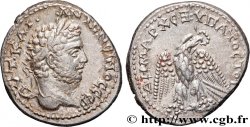



cgbfr.es numismàtica


