


brm_274777 - CONSTANTINO I EL MAGNO Follis ou nummus
No disponible.
Artículo vendido en nuestra tienda (2012)
Precio : 145.00 €
Artículo vendido en nuestra tienda (2012)
Precio : 145.00 €
Tipo : Follis ou nummus
Fecha: été
Fecha: 307
Nombre del taller / ciudad: Lyon
Metal: cobre
Diámetro: 28 mm
Eje de acuñación: 6 h.
Peso: 6,75 g.
Comentarios sobre el estado de conservación:
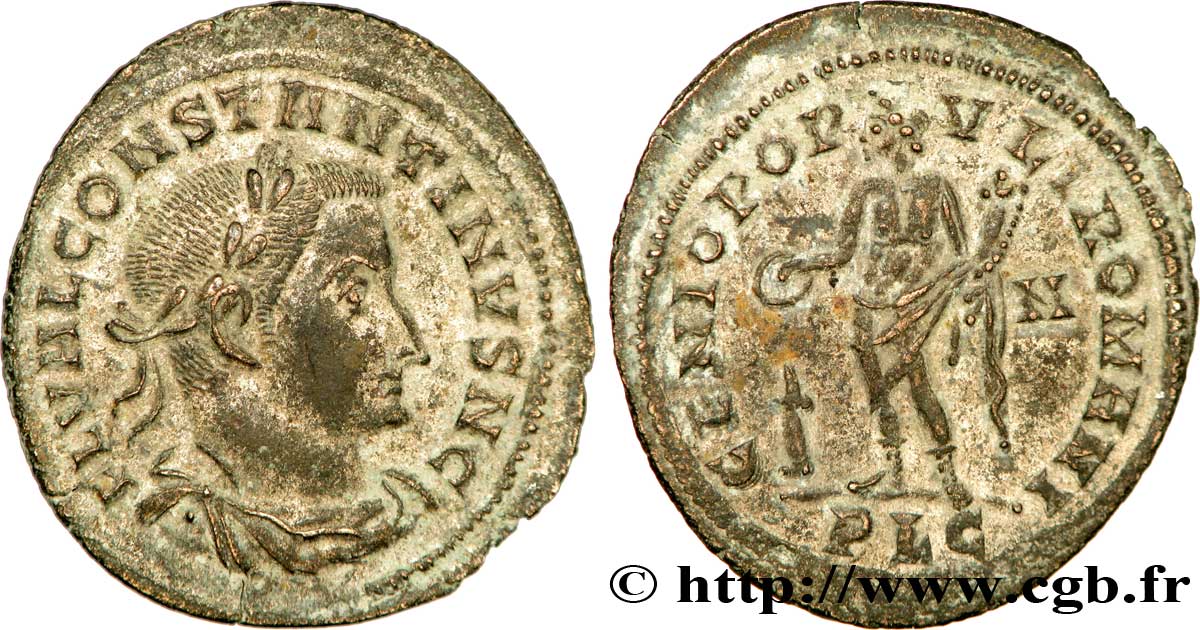
Exemplaire sur un flan mince, très large, ovale, bien centré des deux côtés avec les grènetis visibles. Beau portrait de Constantin Ier. Joli revers de style fin. Patine gris vert avec des reflets métalliques
N° en los catálogos de referencia :
Pedigrí:
Cet exemplaire provient du trésor de Marchais (Aisne), (J.-P. Callu, Inventaire des trésors de bronze constantiniens (313-348), p. 29, n° 9 et de la collection du baron L. Chaurand (Lyon)
Anverso
Titulatura del anverso: FL VAL CONSTANTINVS N C.
Descripción del anverso: Buste lauré, drapé et cuirassé de Constantin Ier césar à droite, vu de trois quarts en avant (A*).
Traducción del anverso: “Flavius Valerius Constantinus Nobilissimus Cæsar”, (Flavien Valère Constantin très noble césar).
Reverso
Titulatura del reverso: GENIO POP-VLI ROMANI/ (AUTEL)|N// PLG.
Descripción del reverso: Genius (Génie) debout à gauche, coiffé du modius, le Génie porte l’himation, tenant une patère de la main droite et une corne d'abondance de la main gauche.
Traducción del reverso: “Genio Populi Romani”, (Au Génie du Peuple romain).
Comentario
Avec son argenture superficielle. Poids léger. Rubans de type 3. Ptéryges invisibles sous le paludamentum. Un changement radical intervient dans la représentation du Génie au revers. Il est maintenant normalement revêtu de l’himation au lieu du manteau tombant sur l’épaule (paludamentum). Une autre innovation est l’apparition d’un N dans le champ à droite. Nous nous sommes interrogés sur la présence et la signification de ce N. Il pourrait tout simplement signifier “Nova”, (nouvelle) pour rappeler techniquement la réduction du follis du 1/32 L. au 1/40 L. Nous n’avons relevé aucune liaison de coin pertinente. Cet exemplaire est cité dans l’ouvrage de Pierre Bastien.
With its superficial silver plating. Light weight. Type 3 ribbons. Invisible pteryges under the paludamentum. A radical change occurs in the representation of the Genius on the reverse. He is now normally dressed in the himation instead of the mantle falling over the shoulder (paludamentum). Another innovation is the appearance of an N in the right field. We wondered about the presence and meaning of this N. It could simply mean “Nova”, (new) to technically recall the reduction of the follis from 1/32 L. to 1/40 L. We did not note any relevant die connection. This example is cited in the work of Pierre Bastien
With its superficial silver plating. Light weight. Type 3 ribbons. Invisible pteryges under the paludamentum. A radical change occurs in the representation of the Genius on the reverse. He is now normally dressed in the himation instead of the mantle falling over the shoulder (paludamentum). Another innovation is the appearance of an N in the right field. We wondered about the presence and meaning of this N. It could simply mean “Nova”, (new) to technically recall the reduction of the follis from 1/32 L. to 1/40 L. We did not note any relevant die connection. This example is cited in the work of Pierre Bastien
Historial
CONSTANTINO I EL MAGNO
(25/07/306-22/05/337)
César
Constantino fue proclamado augusto a la muerte de su padre en York en 306. Para no ofender a Galerio y Severo, se contentó con el título de César reconocido por Galerio, que se había convertido en "Mayor Augusto". Constantino controla la Galia y Bretaña. Retomó el título de agosto el 25 de diciembre de 307 después de haberse casado con Fausta, la hija de Maximien Hercules..
 Informar de un error
 Imprimir la página
 Comparte mi selección
 Haz una pregunta
 Consignar / vender
Artículos relacionados

 Descriptivo



Productos que has visto recientemente

HENRY III Double tournois 1588 Rouen RC+
6.00 €
FRANCIA 50 Euro LA SEMEUSE 2010 FDC
51.00 €
FRANCIA 50 Euro LA SEMEUSE 2010 FDC
53.00 €
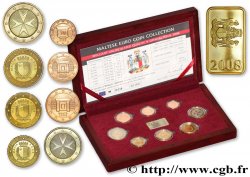
MALTA COFFRET Euro BRILLANT UNIVERSEL 2008 BU
52.00 €

Boîte Fleur de Coins 1976 F.5000 20 FDC
45.00 €
cgbfr.es numismàtica


