


fjt_0920 - FRANC-MAÇONNERIE - PARIS LOGE DES AMIS DE LA PAIX 1789

No disponible.
Artículo vendido en nuestra tienda
Precio : 90.00 €
Artículo vendido en nuestra tienda
Precio : 90.00 €
Tipo : LOGE DES AMIS DE LA PAIX
Fecha: 1789
Metal: cobre rojo
Diámetro: 28 mm
Eje de acuñación: 6 h.
Canto: cannelée
Grado de rareza: R1
N° en los catálogos de referencia :
Anverso
Titulatura del anverso: CARRÉ LONG L. DES. AMIS. DE. LA . PAIX.
Descripción del anverso: Minerve debout à gauche, tenant une branche d'olivier de la main droite, la gauche sur une haste.
Reverso
Titulatura del reverso: O .:. DE PARIS 5789.
Descripción del reverso: Couronne constituée d'une palme et d'une branche de laurier nouées par un ruban.
Comentario
Il faut noter la forme d’abréviation caractéristique des trois points posés en triangle après les lettres O pour Orient et le rectangle au droit pour Loge. Le millésime est ésotérique : les francs-maçons rajoutent 4.000 à l’ère vulgaire pour fixer la date maçonnique, ici 1789 + 4000 = 5789. Frappe d’origine.
La franc-maçonnerie s’implante en France aux alentours du premier quart du XVIIIe s. sous l’influence d’aristocrates anglais. Initiatique, elle est fondée sur le rite hiramique, du nom d’Hiram de Tyr, personnage biblique, architecte du roi Salomon sur le chantier du Temple et qui a résisté à la torture sans livrer ses secrets. Hiram a aussi donné un point de départ du calendrier maçonnique commençant 4000 ans avant le calendrier chrétien. Les symboles servent de signes de reconnaissance entre les initiés, notamment des outils de constructeur de cathédrales (équerre, compas, niveau, maillet, etc.), des formes (triangle, étoile), des nombres (trois, cinq, sept) et des lettres.
It is worth noting the characteristic abbreviation form of the three points placed in a triangle after the letters O for Orient and the rectangle to the obverse for Lodge. The vintage is esoteric: the Freemasons add 4,000 to the common era to fix the Masonic date, here 1789 + 4000 = 5789. Original strike. Freemasonry was established in France around the first quarter of the 18th century under the influence of English aristocrats. Initiatory, it is based on the Hiramic rite, named after Hiram of Tyre, a biblical character, architect of King Solomon on the construction site of the Temple and who resisted torture without revealing his secrets. Hiram also gave a starting point for the Masonic calendar beginning 4000 years before the Christian calendar. Symbols serve as signs of recognition between initiates, including cathedral builder's tools (square, compass, level, mallet, etc.), shapes (triangle, star), numbers (three, five, seven) and letters
La franc-maçonnerie s’implante en France aux alentours du premier quart du XVIIIe s. sous l’influence d’aristocrates anglais. Initiatique, elle est fondée sur le rite hiramique, du nom d’Hiram de Tyr, personnage biblique, architecte du roi Salomon sur le chantier du Temple et qui a résisté à la torture sans livrer ses secrets. Hiram a aussi donné un point de départ du calendrier maçonnique commençant 4000 ans avant le calendrier chrétien. Les symboles servent de signes de reconnaissance entre les initiés, notamment des outils de constructeur de cathédrales (équerre, compas, niveau, maillet, etc.), des formes (triangle, étoile), des nombres (trois, cinq, sept) et des lettres.
It is worth noting the characteristic abbreviation form of the three points placed in a triangle after the letters O for Orient and the rectangle to the obverse for Lodge. The vintage is esoteric: the Freemasons add 4,000 to the common era to fix the Masonic date, here 1789 + 4000 = 5789. Original strike. Freemasonry was established in France around the first quarter of the 18th century under the influence of English aristocrats. Initiatory, it is based on the Hiramic rite, named after Hiram of Tyre, a biblical character, architect of King Solomon on the construction site of the Temple and who resisted torture without revealing his secrets. Hiram also gave a starting point for the Masonic calendar beginning 4000 years before the Christian calendar. Symbols serve as signs of recognition between initiates, including cathedral builder's tools (square, compass, level, mallet, etc.), shapes (triangle, star), numbers (three, five, seven) and letters
Historial
FRANC-MAÇONNERIE - PARIS
El compás y la escuadra se asocian muy a menudo en un símbolo ambivalente de equilibrio: fijeza y movilidad, pasivo y activo, materia y espíritu.. La brújula es la herramienta del Creador y del gran Arquitecto del Universo. El espaciado de las ramas del compás obedece a reglas precisas y varía según los tres grados: aprendiz, compañero, maestro. La era napoleónica, en la actividad de las logias como en la de muchos grupos, vio un florecimiento después de los terribles años del período revolucionario.. La actividad masónica, despojada de sus teorías republicanas y firmemente controlada por un Gran Maestre designado por el Emperador, experimentó un vigor de unidad jamás encontrado desde entonces.. Se considera que cada regimiento, cada guarnición, cada ciudad tenía su Logia. Los testimonios que nos dejan las suntuosas prendas de la época demuestran que estas logias eran ricas e influyentes.. Se busca la simbología, sin comparación con las épocas posteriores, mucho más convencionales, incluso insípidas o desfavorecidas a principios del siglo XX.. La masonería contaba con más de mil logias repartidas en ciento treinta departamentos y más de sesenta mil Hermanos.
 Informar de un error
 Imprimir la página
 Comparte mi selección
 Haz una pregunta
 Consignar / vender
 Descriptivo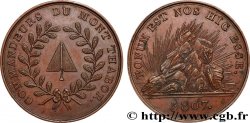


cgbfr.es numismàtica


