


brm_198784 - JULIO CAESAR Denier
No disponible.
Artículo vendido en nuestra tienda
Precio : 350.00 €
Artículo vendido en nuestra tienda
Precio : 350.00 €
Tipo : Denier
Fecha: 49 AC.
Nombre del taller / ciudad: Gaule ou Italie
Metal: plata
Milésimas de pureza : 950 ‰
Diámetro: 18,00 mm
Eje de acuñación: 11 h.
Peso: 3,97 g.
Grado de rareza: R1
Comentarios sobre el estado de conservación:
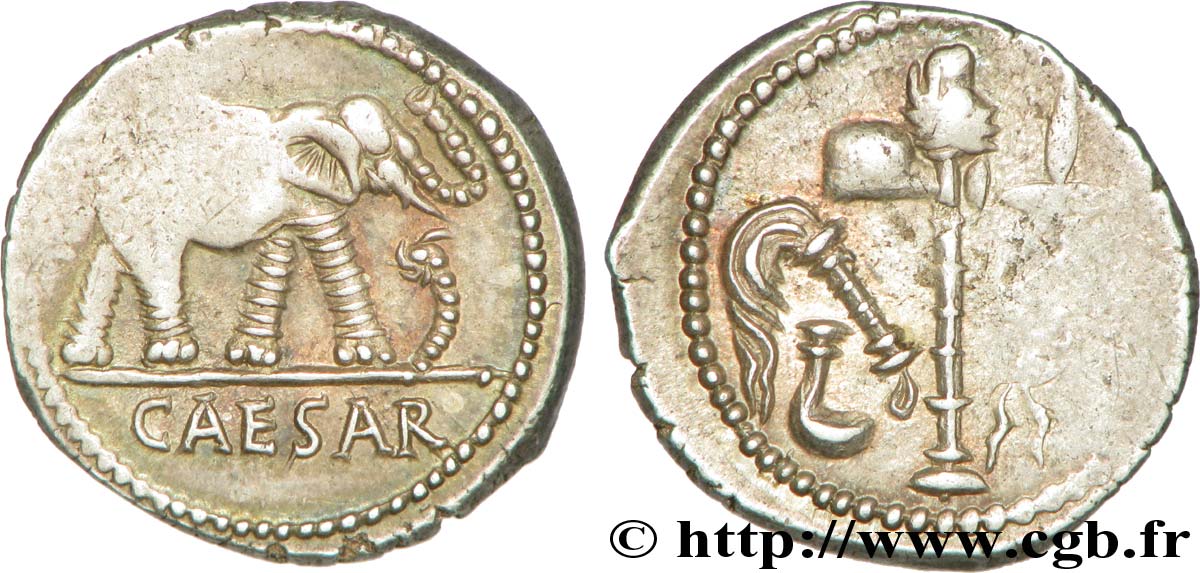
Exemplaire sur un flan régulier, bien centré des deux côtés avec les grènetis complets. Défaut de frappe des deux côtés avec un plat de fabrication. Droit bien venu à la frappe. Revers de style fin. Jolie patine de médaillier avec des reflets mordorés
N° en los catálogos de referencia :
Anverso
Titulatura del anverso: CAESAR À L'EXERGUE.
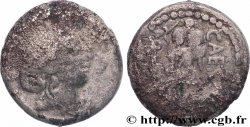
Descripción del anverso: Éléphant passant à droite ; à ses pieds, un serpent (ou carnyx, trompette gauloise).
Traducción del anverso: “Cæsar”, (César).
Reverso
Titulatura del reverso: ANÉPIGRAPHE.
Descripción del reverso: Instruments pontificaux : simpulum, aspersoir, hache à sacrifice, chapeau à sacrifice.
Comentario
Pour ce type, M. Crawford a relevé une estimation de 750 coins de droit et de 833 coins de revers, représentant une production qui pourrait avoisiner les deux à quatre millions de deniers. Pendant très longtemps, on pensa que ce denier avait été frappé par César pendant la Guerre des Gaules entre 58 et 52 avant J.-C., en Gaule même. En fait, il fut fabriqué au début des Guerres Civiles. Sur cet exemplaire, nous notons un plat de fabrication des deux côtés.
For this type, Mr. Crawford noted an estimate of 750 obverse dies and 833 reverse dies, representing a production that could be around two to four million denarii. For a very long time, it was thought that this denarius had been struck by Caesar during the Gallic Wars between 58 and 52 BC, in Gaul itself. In fact, it was made at the beginning of the Civil Wars. On this example, we note a manufacturing flat on both sides
For this type, Mr. Crawford noted an estimate of 750 obverse dies and 833 reverse dies, representing a production that could be around two to four million denarii. For a very long time, it was thought that this denarius had been struck by Caesar during the Gallic Wars between 58 and 52 BC, in Gaul itself. In fact, it was made at the beginning of the Civil Wars. On this example, we note a manufacturing flat on both sides
Historial
JULIO CAESAR
(13/07/100-15/03/44 aC)
Julio César, nacido en el año 100 a. C., pertenece al partido de Marius y se opone a Sylla desde muy joven. Fue pretor en el 62 a. C., antes de formar con Pompeyo y Craso el primer triunvirato en el 59 a. C., año de su consulado. Luego recibe un imperium proconsular sobre la Galia, renovado en 54. Lucha contra Vercingétorix en Gergovie y luego en Alesia. Asediado, el líder galo debe rendirse. Habiendo muerto Craso en Carrhae, en Mesopotamia, en el 53 aC, César se enojó con Pompeyo y marchó sobre Roma en el 49 aC En el 48 aC, en Farsalia, aplastó a Pompeyo que huyó a Egipto donde fue asesinado. César debe entonces enfrentarse a los hijos de Pompeyo y al partido pompeyano. Los derrotó en Thapsus (África, muerte de Catón de Utica) en el 46 a. C. y en Munda (España, muerte de Cneius Pompey). César fue asesinado en los idus de marzo (15 de marzo de 44 a. C.) por Casio y Bruto. Fue deificado después de su muerte en el 42 a..
 Informar de un error
 Imprimir la página
 Comparte mi selección
 Haz una pregunta
 Consignar / vender
Artículos relacionados

 Descriptivo

Productos que has visto recientemente

TIBERIO As MBC
85.00 €

JULIA DOMNA Denier MBC+
115.00 €

JULIA DOMNA Denier MBC+
125.00 €

JULIO CAESAR Denier MBC
680.00 €
cgbfr.es numismàtica


