


Volver 1/1
bgr_275223 - LUCANIA - VELIA Nomos, statère ou didrachme

No disponible.
Artículo vendido en nuestra tienda (2012)
Precio : 850.00 €
Artículo vendido en nuestra tienda (2012)
Precio : 850.00 €
Tipo : Nomos, statère ou didrachme
Fecha: c. 400-365 AC.
Nombre del taller / ciudad: Lucanie, Vélia
Metal: plata
Diámetro: 21 mm
Eje de acuñación: 6 h.
Peso: 7,52 g.
Grado de rareza: R2
Comentarios sobre el estado de conservación:
Exemplaire sur un flan large et irrégulier, bien centré des deux côtés. Beau portrait de bonne facture et de joli style. Revers magnifique bien venu à la frappe avec un lion de haut reliefet une chouette de style fin. Une jolie patine grise superficielle recouvre l’exemplaire avec des reflets dorés
N° en los catálogos de referencia :
Pedigrí:
Cet exemplaire provient de la vente Peus de novembre 1990
Anverso
Titulatura del anverso: ANÉPIGRAPHE.
Descripción del anverso: Tête d'Athéna à gauche, coiffée du casque attique à cimier avec triple aigrette, orné d’un griffon.
Reverso
Descripción del reverso: Lion passant à droite surmonté d’une chouette volant à droite, les ailes ouvertes.
Leyenda del reverso: UELHTWN
Traducción del reverso: (de Vélia).
Comentario
Semble de mêmes coins que l’exemplaire d’Oxford (SNG Oxford, n° 1178). Très tôt, le monnayage de Vélia a été décrit comme ayant inspiré la drachme lourde de Marseille (LT. 785-791). Certains l’ont même décrit comme un monnayage symmachique : un lion de Vélia étant l’équivalent de deux lions de Marseille. Aujourd’hui, cette théorie est remise en cause par G. Depeyrot, non sans arguments, mais avec une certaine acrimonie. Le lion de Vélia a pu servir de modèle à celui de Marseille, mais à quelle date ? La frappe à Vélia commence dans la seconde moitié du Ve siècle avant J.-C. pour se poursuivre jusqu’en 281 avant J.-C. À quel moment les Massaliotes auraient-ils empruntés le lion de Vélia ?.
Appears to have the same dies as the Oxford copy (SNG Oxford, no. 1178). Very early on, the coinage of Velia was described as having inspired the heavy drachma of Marseille (LT. 785-791). Some have even described it as a symmachic coinage: one lion of Velia being the equivalent of two lions of Marseille. Today, this theory is challenged by G. Depeyrot, not without arguments, but with some acrimony. The lion of Velia could have served as a model for that of Marseille, but at what date? Minting at Velia began in the second half of the 5th century BC and continued until 281 BC. At what point would the Massaliotes have borrowed the lion of Velia?
Appears to have the same dies as the Oxford copy (SNG Oxford, no. 1178). Very early on, the coinage of Velia was described as having inspired the heavy drachma of Marseille (LT. 785-791). Some have even described it as a symmachic coinage: one lion of Velia being the equivalent of two lions of Marseille. Today, this theory is challenged by G. Depeyrot, not without arguments, but with some acrimony. The lion of Velia could have served as a model for that of Marseille, but at what date? Minting at Velia began in the second half of the 5th century BC and continued until 281 BC. At what point would the Massaliotes have borrowed the lion of Velia?
Historial
LUCANIA - VELIA
(440-400 a. C.)
Velia, Elea para los griegos, fue fundada alrededor del 540 a.C. por los foceanos que habían abandonado Asia Menor tras la caída de Creso y Sardis en el 546 a.C. Velia se convirtió en aliada de los romanos a partir del 275 a.C. El león era el símbolo de Velia, por lo tanto su uso en la moneda Masssaliote que tenía estrechos vínculos con Velia.
 Informar de un error
 Imprimir la página
 Comparte mi selección
 Haz una pregunta
 Consignar / vender
 Descriptivo
Productos que has visto recientemente
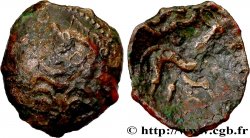
GALLIA - AULERCI EBUROVICES (Región d'Evreux) Bronze au cheval MBC/BC+
23.00 €

TRACIA - CERONESOS DE TRACIA - CARDIA Hemidrachme ou tetrobole MBC+
180.00 €

LUCANIA - METAPONTO Nomos ou Didrachme EBC
1500.00 €

100 francs Cochet 1958 F.450/12 MBC+
6.00 €

RUSIA Sceau de Volhynia (1200-1250) BC
30.00 €
YIBUTI 100 Francs 2013 Paris SC
5.00 €
cgbfr.es numismàtica


