


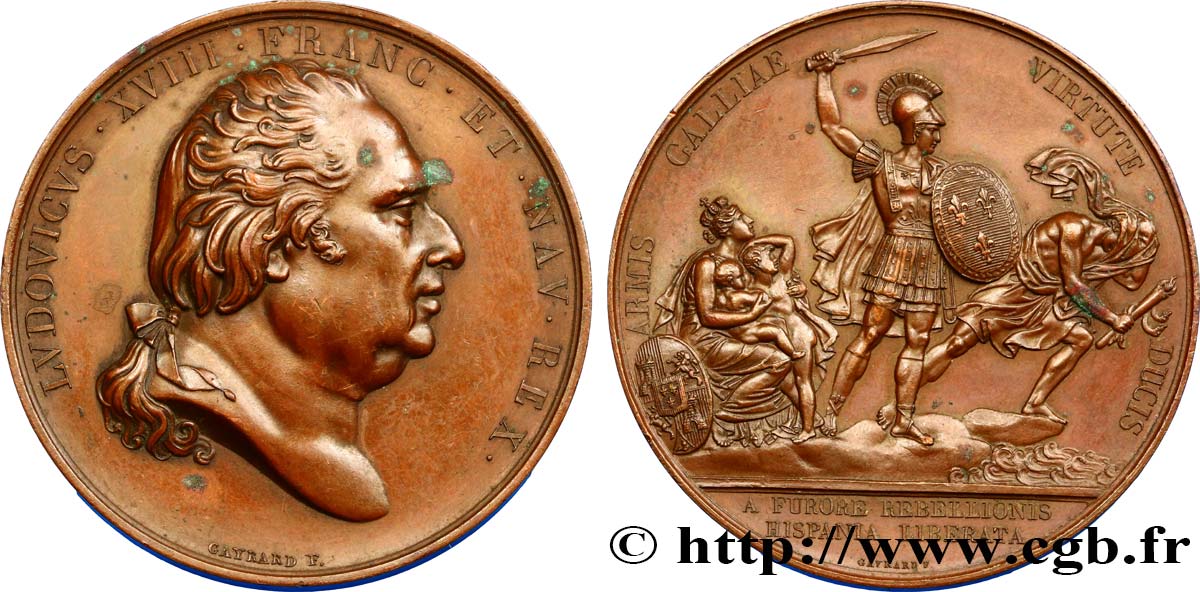
E-auction 488-399453 - fme_412461 - LUIS XVIII Médaille, Restauration du trône d’Espagne
Usted debe firmar y ser un comprador aprobado para pujar, Inicia sesión para pujar. Las cuentas están sujetas a la aprobación y el proceso de aprobación se alcanzan dentro de las 48 horas. No espere hasta el día en una venta se cierra el registro.Al hacer una oferta en este artículo usted está firmando un contrato jurídicamente vinculante para comprar este artículo y haga clic en «oferta» constituye una aceptación de los términos de uso de e-auctions de cgb.fr.
La subasta debe ser colocado en euros enteros cantidades venta only.The se cerrará en el momento en la descripción del artículo, no se ejecutarán las ofertas recibidas en el sitio después de la hora de cierre. Veces Transmition pueden variar y las ofertas pueden ser rechazadas si espera a los últimos segundos. Para más información envie el FAQ.
SIN GASTOS PARA LOS COMPRADORES.
SIN GASTOS PARA LOS COMPRADORES.
| Valoración : | 150 € |
| Precio : | 46 € |
| Oferta más alta : | 56 € |
| Fecha de fin de la venta : | 22 agosto 2022 17:52:00 |
| participantes : | 10 participantes |
Tipo : Médaille, Restauration du trône d’Espagne
Fecha: 1823
Nombre del taller / ciudad: Espagne
Metal: bronce
Diámetro: 51 mm
Eje de acuñación: 12 h.
Acuñador Gayrard
Peso: 68 g.
Canto: lisse
Cuño: sans poinçon
Comentarios sobre el estado de conservación:
Patine marron hétérogène avec des concrétions vertes. Légère usure. Présence d equelques coups
N° en los catálogos de referencia :
Anverso
Titulatura del anverso: LVDOVICVS. XVIII. FRANC. ET. NAV. REX..
Descripción del anverso: Tête de Louis XVIII à droite, signé GAYRARD F. .
Reverso
Titulatura del reverso: ARMIS GALLIAE - VIRTUTE DUCIS // A FURORE REBELLIONIS/ HISPANIA LIBERATA.
Descripción del reverso: Guerrier debout vêtu à l'antique brandissant le glaive, le bouclier timbré de trois lys, repoussant l'ennemi vers la mer ; à gauche, l'Espagne assise retenant deux enfants, à ses pieds un bouclier timbré aux armes de Castille et de Léon, signé GAYRARD F. .
Comentario
Médaille signe GAYRARD F.
Raymond Gayrard, sculpteur-graveur, (Rodez, 25 octobre 1777-1858), est l'élève de François Rude et David d'Angers. Il expose au salon de Paris en 1827 et poursuit ses expositions tout au long de sa vie. En 1834, il obtient la deuxième place au concours et la médaille de première classe en 1846 et 1848. Il expose pour la dernière fois en 1855. Apprécié de la haute société française, il exécute beaucoup de bustes de personnalités contemporaines. Il est est également sculpteur animalier.
Paul Joseph Raymond Gayrard, dit Raymond Gayrard, né le 3 septembre 1807 à Clermont-Ferrand (Puy-de-Dôme) et mort en 1855 à Enghien-les-Bains (Val-d'Oise), est un sculpteur et graveur-médailleur français. Il étudie à un âge précoce avec son père.
La restauration absolutiste en Espagne, s'étendant de 1814 à 1833, est une période au cours de laquelle le pays connaît un rétablissement de la monarchie absolue des Bourbons.
Après la guerre d'indépendance contre l'occupant français, les Cortès se réunissent à Madrid en octobre 1813. Peu après, Napoléon reconnaît Ferdinand VII comme roi d'Espagne par le traité de Valençay. Fort du soutien de la majeure partie de la population espagnole, celui-ci rentre dans sa capitale, le 22 mars 1814, par le chemin de Valence. Il reçoit alors, de la main d'un groupe de fidèles de la monarchie le manifeste des Perses, une déclaration favorable à une restauration absolutiste.
Début 1823, la Sainte Alliance décide d'intervenir en Espagne, ainsi qu'elle l'a déjà fait à Naples et au Piémont. Le 22 janvier un traité secret est signé qui permet à la France d'envahir l'Espagne pour rétablir Ferdinand VII en monarque absolu.
Medal signed GAYRARD F.
Raymond Gayrard, sculptor-engraver, (Rodez, October 25, 1777-1858), was a student of François Rude and David d'Angers. He exhibited at the Paris Salon in 1827 and continued to exhibit throughout his life.. In 1834 he obtained second place in the competition and the first class medal in 1846 and 1848.. He exhibited for the last time in 1855. Appreciated by French high society, he executed many busts of contemporary personalities. He is also an animal sculptor.
Paul Joseph Raymond Gayrard, known as Raymond Gayrard, born on September 3, 1807 in Clermont-Ferrand (Puy-de-Dôme) and died in 1855 in Enghien-les-Bains (Val-d'Oise), was a French sculptor and engraver-medalist. He studied at an early age with his father.
The absolutist restoration in Spain, lasting from 1814 to 1833, was a period during which the country experienced a reestablishment of the absolute Bourbon monarchy..
After the war of independence against the French occupiers, the Cortes met in Madrid in October 1813.. Shortly after, Napoleon recognized Ferdinand VII as King of Spain by the Treaty of Valençay. With the support of the majority of the Spanish population, he returned to his capital on March 22, 1814, via Valencia.. He then received, from the hand of a group of loyalists of the monarchy, the manifesto of the Persians, a declaration in favor of an absolutist restoration.
At the beginning of 1823, the Holy Alliance decided to intervene in Spain, as it had already done in Naples and Piedmont.. On January 22, a secret treaty was signed that allowed France to invade Spain and reinstate Ferdinand VII as absolute monarch.
Raymond Gayrard, sculpteur-graveur, (Rodez, 25 octobre 1777-1858), est l'élève de François Rude et David d'Angers. Il expose au salon de Paris en 1827 et poursuit ses expositions tout au long de sa vie. En 1834, il obtient la deuxième place au concours et la médaille de première classe en 1846 et 1848. Il expose pour la dernière fois en 1855. Apprécié de la haute société française, il exécute beaucoup de bustes de personnalités contemporaines. Il est est également sculpteur animalier.
Paul Joseph Raymond Gayrard, dit Raymond Gayrard, né le 3 septembre 1807 à Clermont-Ferrand (Puy-de-Dôme) et mort en 1855 à Enghien-les-Bains (Val-d'Oise), est un sculpteur et graveur-médailleur français. Il étudie à un âge précoce avec son père.
La restauration absolutiste en Espagne, s'étendant de 1814 à 1833, est une période au cours de laquelle le pays connaît un rétablissement de la monarchie absolue des Bourbons.
Après la guerre d'indépendance contre l'occupant français, les Cortès se réunissent à Madrid en octobre 1813. Peu après, Napoléon reconnaît Ferdinand VII comme roi d'Espagne par le traité de Valençay. Fort du soutien de la majeure partie de la population espagnole, celui-ci rentre dans sa capitale, le 22 mars 1814, par le chemin de Valence. Il reçoit alors, de la main d'un groupe de fidèles de la monarchie le manifeste des Perses, une déclaration favorable à une restauration absolutiste.
Début 1823, la Sainte Alliance décide d'intervenir en Espagne, ainsi qu'elle l'a déjà fait à Naples et au Piémont. Le 22 janvier un traité secret est signé qui permet à la France d'envahir l'Espagne pour rétablir Ferdinand VII en monarque absolu.
Medal signed GAYRARD F.
Raymond Gayrard, sculptor-engraver, (Rodez, October 25, 1777-1858), was a student of François Rude and David d'Angers. He exhibited at the Paris Salon in 1827 and continued to exhibit throughout his life.. In 1834 he obtained second place in the competition and the first class medal in 1846 and 1848.. He exhibited for the last time in 1855. Appreciated by French high society, he executed many busts of contemporary personalities. He is also an animal sculptor.
Paul Joseph Raymond Gayrard, known as Raymond Gayrard, born on September 3, 1807 in Clermont-Ferrand (Puy-de-Dôme) and died in 1855 in Enghien-les-Bains (Val-d'Oise), was a French sculptor and engraver-medalist. He studied at an early age with his father.
The absolutist restoration in Spain, lasting from 1814 to 1833, was a period during which the country experienced a reestablishment of the absolute Bourbon monarchy..
After the war of independence against the French occupiers, the Cortes met in Madrid in October 1813.. Shortly after, Napoleon recognized Ferdinand VII as King of Spain by the Treaty of Valençay. With the support of the majority of the Spanish population, he returned to his capital on March 22, 1814, via Valencia.. He then received, from the hand of a group of loyalists of the monarchy, the manifesto of the Persians, a declaration in favor of an absolutist restoration.
At the beginning of 1823, the Holy Alliance decided to intervene in Spain, as it had already done in Naples and Piedmont.. On January 22, a secret treaty was signed that allowed France to invade Spain and reinstate Ferdinand VII as absolute monarch.
Historial
LUIS XVIII
(06/04/1814-16/09/1824)
Louis-Stanislas-Xavier nació en Versalles en 1755 de la unión de Dauphin Louis (hijo de Louis XV) y Marie-Josèphe Louise de Savoie. Primero recibió el título de Conde de Provenza y fue llamado Monsieur cuando su hermano mayor, Luis XVI, se convirtió en rey en 1774.. Casado con Louise Marie-Joséphine de Savoie en 1771, no tuvo hijos.. A menudo en oposición a la Corte, inicialmente no condenó el movimiento de 1789 pero la evolución de los acontecimientos le decidió a abandonar París en compañía de su esposa, el mismo día de la huida de Luis XVI a Varennes, pero por otro camino.. Refugiado en Coblenza con su hermano, el conde de Artois, tomó el título de regente tras la ejecución de Luis XVI y luego, a la muerte de su sobrino Luis XVII, el de rey. Empezó a trabajar en la restauración a pesar de los escasos apoyos de que disponía y tuvo que cambiar varias veces de residencia ante las victorias de la Revolución y de Bonaparte.. Con el Primer Imperio, la causa monárquica parecía desesperada y Luis XVIII se instaló en Inglaterra en un período de exilio y vergüenza financiera.. Durante las primeras derrotas de Napoleón I, Luis XVIII retomó su actividad diplomática que, por iniciativa de Talleyrand y gracias al apoyo inglés, le permitió regresar a Francia en mayo de 1814.. Obligado a huir a Gante durante los Cien Días, Luis XVIII, durante la segunda Restauración, trató de llevar a cabo la misma política de reconciliación que definió en su primer regreso a Francia.. Tras el Terror Blanco (ejecución del Mariscal Ney), el régimen se suavizó y se durmió. Duke Decazes reemplaza a Richelieu desde 1818. A pesar de la presión realista, Luis XVIII apoyó firmemente la política moderada de Decazes en los primeros años.. Francia se reincorpora al concierto de Naciones tras el Congreso de Aix-la-Chapelle. Las fuerzas de ocupación abandonan Francia. La ley de censura se relaja en 1819. Ese año, Géricault presentó la Balsa de la Medusa. La política de conciliación cesa tras el asesinato del duque de Berry el 13 de febrero de 1820 por Louvel. Abrumado por la reacción de los ultras tras este asesinato, Decazes dimitió el 20 de febrero y el duque de Richelieu fue destituido, marcando así el triunfo de la derecha para el final del reinado y para el reinado siguiente.. El niño del milagro, Enrique, duque de Burdeos, hijo póstumo de Carlos, duque de Berry y María Carolina de Borbón, nació el 29 de septiembre de 1820.. Napoleón I murió en Santa Elena el 5 de mayo de 1821.. Villele reemplaza a Richelieu el 14 de diciembre de 1821. El final del reinado está marcado por la expedición a España, comandada por el duque de Angulema, organizada para restaurar a Fernando VII, expulsado por los liberales.. Los franceses tomaron Madrid el 23 de mayo, Fort Trocadéro el 31 de agosto y Cádiz el 30 de septiembre de 1823.. Luis XVIII, enfermo y lisiado (gota), murió el 16 de septiembre de 1824. Está enterrado en Saint-Denis el 23 de septiembre..
 Informar de un error
 Imprimir la página
 Comparte mi selección
 Haz una pregunta
 Consignar / vender
Artículos relacionados

 Descriptivo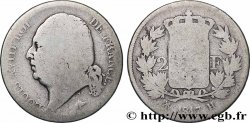


Productos que has visto recientemente
FRANCIA 10 Euro NAPOLEON Ier 2014 Prueba
70.00 €

50 centimes Chambres de Commerce 1926 F.191/8 SC64
31.00 €

POLONIA Médaille, Massacres de Galicie MBC
95.00 €
TERCERA REPUBLICA FRANCESA Médaille, Inauguration du musée social MBC+
650.00 €

LITERATURE : WRITERS - POETS Médaille, Jacques Hébertot EBC+
75.00 €

320 reales or 1810 Madrid VG.2058 MBC
14500.00 €
cgbfr.es numismàtica


