


Usted debe firmar y ser un comprador aprobado para pujar, Inicia sesión para pujar. Las cuentas están sujetas a la aprobación y el proceso de aprobación se alcanzan dentro de las 48 horas. No espere hasta el día en una venta se cierra el registro.Al hacer una oferta en este artículo usted está firmando un contrato jurídicamente vinculante para comprar este artículo y haga clic en «oferta» constituye una aceptación de los términos de uso de e-auctions de cgb.fr.
La subasta debe ser colocado en euros enteros cantidades venta only.The se cerrará en el momento en la descripción del artículo, no se ejecutarán las ofertas recibidas en el sitio después de la hora de cierre. Veces Transmition pueden variar y las ofertas pueden ser rechazadas si espera a los últimos segundos. Para más información envie el FAQ.
SIN GASTOS PARA LOS COMPRADORES.
SIN GASTOS PARA LOS COMPRADORES.
| Valoración : | 220 € |
| Precio : | 97 € |
| Oferta más alta : | 120 € |
| Fecha de fin de la venta : | 22 octubre 2018 14:53:30 |
| participantes : | 10 participantes |
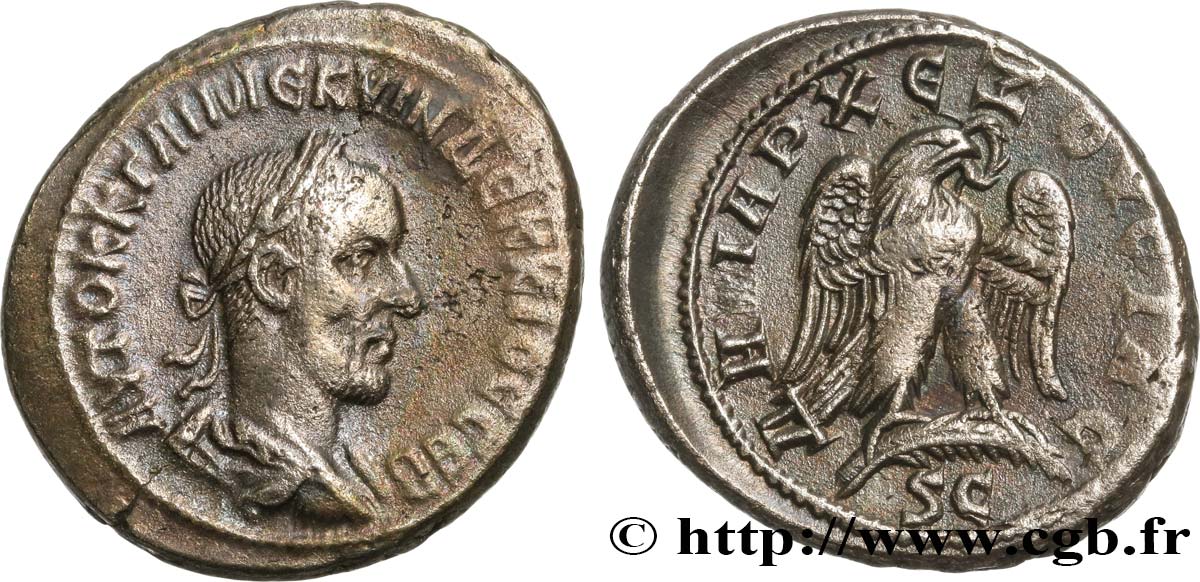
Tipo : Tétradrachme syro-phénicien
Fecha: 249
Nombre del taller / ciudad: Antioche, Syrie, Séleucie et Piérie
Metal: vellón
Diámetro: 28 mm
Eje de acuñación: 6 h.
Peso: 12,23 g.
Grado de rareza: R2
Comentarios sobre el estado de conservación:
Traces d’usure, sur l’oreille et le poitrail de l’aigle, patine épaisse et foncée, flan irrégulier et net décentrage au revers, plat de frappe
N° en los catálogos de referencia :
Pedigrí:
Cet exemplaire, qui est le 0501_007 de la base TSP, provient de la trouvaille dite de Vœgtli de mars 1993
Anverso
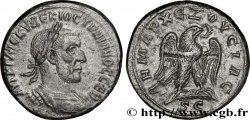
Descripción del anverso: Buste lauré, drapé et cuirassé de Trajan Dèce à droite, vu de trois quarts en arrière (A*2).
Leyenda del anverso: AUTOK K GAI ME KUIN DEKKIOS SEB
Traducción del anverso: (L’empereur césar Caius Messius Quintus Dèce auguste).
Reverso
Titulatura del reverso: S C À L’EXERGUE.
Descripción del reverso: Aigle debout à droite sur une palme, les ailes déployées, tête à droite et queue à gauche, tenant une couronne feuillée dans son bec.
Leyenda del reverso: DHMARC EX OUSIAS
Traducción del reverso: (Revêtu de la puissance tribunitienne / avec l’accord du Sénat d’Antioche).
Comentario
On note sur cet exemplaire que le décentrage du revers nous donne un aperçu du rebord du coin, nettement marqué, et qui ne dépassait guère le grènetis.
Les premières émissions de Trajan Dèce se définissent par la légende sans le nom de Trajan ; nous savons que prendre ce surnom fut l’un des premiers actes officiels de Dèce, une fois celui-ci arrivé à Rome, et il faut en déduire que tout ce qui fut frappé sans la mention Trajan est antérieur à cette décision.
Compte tenu de l’importance relative des frappes, on peut penser qu’Antioche, en tous cas les autorités provinciales, firent immédiatement allégeance au nouvel empereur dès sa proclamation et le décès des deux Philippe.
On remarque à ce propos la disparition immédiate de l’exergue ANTIOXIA et le retour à la palme, l’usage avant le troisième consulat de Philippe. Faut-il en déduire que le financement des émissions changea et retourna aux autorités provinciales alors qu’elles auraient été assumées par la ville durant les 3e et 4e consulats de Philippe ? Il faut se rappeler que le frère de Philippe, Priscus, installé à Antioche pendant tout le règne avec tous les pouvoirs (y compris le titre de Rector Orientis !) avait peut-être obligé la ville à financer les émissions monétaires ; la source de son pouvoir disparue (on ignore sa fin) on peut imaginer que la ville se débarrassa du fardeau qui revint donc aux nouvelles autorités provinciales, trop heureuses de manifester leur allégeance au nouveau pouvoir par des émissions monétaires à son effigie.
La structure de cette première émission témoigne aussi d’une confusion certaine. La presque totalité des types sont extrêmement rares, on découvre une cinquième officine, qui n’est pas connue sous Philippe, mais on ne connaît aucune pièce pour les 2e et 3e officine, un aigle à gauche avec tête et queue à droite fait son apparition, On trouve même une variante d’orthographe (un seul K à Dekkioc) qui deviendra ensuite la norme.
À propos des officines, il faut noter que la plupart des frappes ne portent pas de point d’officine, ce qui renforce l’hypothèse d’une série pour Philippe sans points d’officine.
Il est certain que le temps fera apparaître de nouveaux types qui viendront compléter cette série particulièrement difficile.
On note que les sigma sont gravés en C.
Dans la base TSP maintenue par Michel Prieur, dix-sept exemplaires sont maintenant répertoriés pour ce type, plusieurs en musées, un à Jérusalem, à Yale (Trouvaille de Doura I, 386), au British Museum (ex trouvaille d’Amman n° 23 et ancien fonds), Gaziantep, Doura et un à Oxford (Sear Greek Imperials, n° 4209).
We note on this example that the off-centering of the reverse gives us a glimpse of the edge of the die, clearly marked, and which hardly exceeded the graining.
The first issues of Trajan Decius are defined by the legend without the name of Trajan; we know that taking this nickname was one of the first official acts of Decius, once he arrived in Rome, and we must deduce that everything that was struck without the mention Trajan is prior to this decision.
Given the relative importance of the strikes, we can assume that Antioch, or at least the provincial authorities, immediately pledged allegiance to the new emperor upon his proclamation and the death of the two Philips..
In this regard, we note the immediate disappearance of the exergue ANTIOXIA and the return to the palm, the use before the third consulate of Philip. Should we deduce from this that the financing of the issues changed and returned to the provincial authorities when they would have been assumed by the city during the 3rd and 4th consulates of Philip? It must be remembered that Philip's brother, Priscus, installed in Antioch throughout the reign with all the powers (including the title of Rector Orientis!) had perhaps forced the city to finance the monetary issues; the source of his power having disappeared (we do not know how it ended) we can imagine that the city got rid of the burden which therefore fell to the new provincial authorities, only too happy to show their allegiance to the new power by issuing monetary issues bearing his image.
The structure of this first issue also shows a certain confusion.. Almost all the types are extremely rare, we discover a fifth office, which is not known under Philip, but we do not know any piece for the 2nd and 3rd office, an eagle on the left with head and tail on the right makes its appearance, We even find a spelling variant (a single K in Dekkioc) which will then become the standard.
Regarding the pharmacies, it should be noted that most of the strikes do not carry a pharmacy point, which reinforces the hypothesis of a series for Philippe without pharmacy points..
It is certain that time will bring out new types that will complete this particularly difficult series..
Note that the sigmas are engraved in C.
In the TSP database maintained by Michel Prieur, seventeen examples are now listed for this type, several in museums, one in Jerusalem, at Yale (Doura I find, 386), at the British Museum (former Amman find no. 23 and former collection), Gaziantep, Doura and one in Oxford (Sear Greek Imperials, no. 4209)
Les premières émissions de Trajan Dèce se définissent par la légende sans le nom de Trajan ; nous savons que prendre ce surnom fut l’un des premiers actes officiels de Dèce, une fois celui-ci arrivé à Rome, et il faut en déduire que tout ce qui fut frappé sans la mention Trajan est antérieur à cette décision.
Compte tenu de l’importance relative des frappes, on peut penser qu’Antioche, en tous cas les autorités provinciales, firent immédiatement allégeance au nouvel empereur dès sa proclamation et le décès des deux Philippe.
On remarque à ce propos la disparition immédiate de l’exergue ANTIOXIA et le retour à la palme, l’usage avant le troisième consulat de Philippe. Faut-il en déduire que le financement des émissions changea et retourna aux autorités provinciales alors qu’elles auraient été assumées par la ville durant les 3e et 4e consulats de Philippe ? Il faut se rappeler que le frère de Philippe, Priscus, installé à Antioche pendant tout le règne avec tous les pouvoirs (y compris le titre de Rector Orientis !) avait peut-être obligé la ville à financer les émissions monétaires ; la source de son pouvoir disparue (on ignore sa fin) on peut imaginer que la ville se débarrassa du fardeau qui revint donc aux nouvelles autorités provinciales, trop heureuses de manifester leur allégeance au nouveau pouvoir par des émissions monétaires à son effigie.
La structure de cette première émission témoigne aussi d’une confusion certaine. La presque totalité des types sont extrêmement rares, on découvre une cinquième officine, qui n’est pas connue sous Philippe, mais on ne connaît aucune pièce pour les 2e et 3e officine, un aigle à gauche avec tête et queue à droite fait son apparition, On trouve même une variante d’orthographe (un seul K à Dekkioc) qui deviendra ensuite la norme.
À propos des officines, il faut noter que la plupart des frappes ne portent pas de point d’officine, ce qui renforce l’hypothèse d’une série pour Philippe sans points d’officine.
Il est certain que le temps fera apparaître de nouveaux types qui viendront compléter cette série particulièrement difficile.
On note que les sigma sont gravés en C.
Dans la base TSP maintenue par Michel Prieur, dix-sept exemplaires sont maintenant répertoriés pour ce type, plusieurs en musées, un à Jérusalem, à Yale (Trouvaille de Doura I, 386), au British Museum (ex trouvaille d’Amman n° 23 et ancien fonds), Gaziantep, Doura et un à Oxford (Sear Greek Imperials, n° 4209).
We note on this example that the off-centering of the reverse gives us a glimpse of the edge of the die, clearly marked, and which hardly exceeded the graining.
The first issues of Trajan Decius are defined by the legend without the name of Trajan; we know that taking this nickname was one of the first official acts of Decius, once he arrived in Rome, and we must deduce that everything that was struck without the mention Trajan is prior to this decision.
Given the relative importance of the strikes, we can assume that Antioch, or at least the provincial authorities, immediately pledged allegiance to the new emperor upon his proclamation and the death of the two Philips..
In this regard, we note the immediate disappearance of the exergue ANTIOXIA and the return to the palm, the use before the third consulate of Philip. Should we deduce from this that the financing of the issues changed and returned to the provincial authorities when they would have been assumed by the city during the 3rd and 4th consulates of Philip? It must be remembered that Philip's brother, Priscus, installed in Antioch throughout the reign with all the powers (including the title of Rector Orientis!) had perhaps forced the city to finance the monetary issues; the source of his power having disappeared (we do not know how it ended) we can imagine that the city got rid of the burden which therefore fell to the new provincial authorities, only too happy to show their allegiance to the new power by issuing monetary issues bearing his image.
The structure of this first issue also shows a certain confusion.. Almost all the types are extremely rare, we discover a fifth office, which is not known under Philip, but we do not know any piece for the 2nd and 3rd office, an eagle on the left with head and tail on the right makes its appearance, We even find a spelling variant (a single K in Dekkioc) which will then become the standard.
Regarding the pharmacies, it should be noted that most of the strikes do not carry a pharmacy point, which reinforces the hypothesis of a series for Philippe without pharmacy points..
It is certain that time will bring out new types that will complete this particularly difficult series..
Note that the sigmas are engraved in C.
In the TSP database maintained by Michel Prieur, seventeen examples are now listed for this type, several in museums, one in Jerusalem, at Yale (Doura I find, 386), at the British Museum (former Amman find no. 23 and former collection), Gaziantep, Doura and one in Oxford (Sear Greek Imperials, no. 4209)
Historial
TRAJANO DECIO
(07/249-06/251)
Decio nació en 201 en la Baja Panonia. Tras una brillante carrera que le abrió las puertas del Senado, fue gobernador de la Baja Moesia bajo el reinado de Alejandro Severo. Al final del reinado de Filipo, vencedor en el Danubio de las hordas bárbaras, fue proclamado augusto a pesar de su negativa. Se lo escribe a Philippe que no le cree y marcha contra él. Philip y su hijo mueren en una batalla cerca de Verona. Decio une a su nombre el, prestigioso, de Trajano. Después de una temporada en Roma, Decius viaja al Limes del Danubio. Desiertas, las limas permitieron que los godos se filtraran y devastaran las provincias del Danubio, de donde era originario el Emperador. No logra detener la invasión. A partir del 250, una nueva plaga asola el Imperio. La plaga diezmó la población y los rebaños y debilitó aún más a los tilos. Inició una persecución contra los cristianos en 250 (Polyeucte, Corneille). Al año siguiente, fue a las limas, derrotó a los godos, pero su hijo fue asesinado. Él mismo encuentra la muerte queriendo vengarlo. Es el primer emperador en caer en batalla contra los bárbaros..
 Informar de un error
 Imprimir la página
 Comparte mi selección
 Haz una pregunta
 Consignar / vender
Artículos relacionados
 Descriptivo

Productos que has visto recientemente

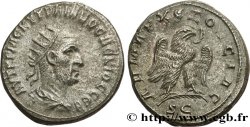
TRAJANO DECIO Tétradrachme syro-phénicien MBC
97.00 €

NARBO - NARBONNA - OCTAVIAN Dupondius BC+/MBC
450.00 €
LOUIS XVI Liard dit “à l'écu” 1787 Nantes MBC
75.00 €
5 francs IIIe type Domard 1845 Paris F.325/6 EBC62
210.00 €

5 centimes Cérès 1878 Bordeaux F.118/18 BC20
130.00 €

20 francs G. Guiraud 1950 F.402/3 FDC65 PCGS
75.00 €
cgbfr.es numismàtica


