


Live auction - bmv_1076134 - TOURS (TVRONVS CIVITAS) Denier

Usted debe firmar y ser un comprador aprobado para pujar, Inicia sesión para pujar. Las cuentas están sujetas a la aprobación y el proceso de aprobación se alcanzan dentro de las 48 horas. No espere hasta el día en una venta se cierra el registro.Al hacer una oferta en este artículo usted está firmando un contrato jurídicamente vinculante para comprar este artículo y haga clic en «oferta» constituye una aceptación de los términos de uso de live auctions de cgb.fr.
La subasta debe ser colocado en euros enteros cantidades venta only.The se cerrará en el momento en la descripción del artículo, no se ejecutarán las ofertas recibidas en el sitio después de la hora de cierre. Veces Transmition pueden variar y las ofertas pueden ser rechazadas si espera a los últimos segundos. Para más información envie el FAQ Live auction.
Las ofertas ganadoras estarán sometidas a un 18% IVA incluido por gastos de participación a la venta.
Las ofertas ganadoras estarán sometidas a un 18% IVA incluido por gastos de participación a la venta.
| Valoración : | 800 € |
| Precio : | 580 € |
| Oferta más alta : | 600 € |
| Fecha de fin de la venta : | 03 marzo 2026 15:36:40 |
| participantes : | 2 participantes |
Tipo : Denier
Fecha: fin du VIIIe siècle
Fecha: s.m.
Nombre del taller / ciudad: Marmoutier à Tours (37)
Metal: plata
Diámetro: 11,5 mm
Eje de acuñación: 7 h.
Peso: 1,03 g.
Grado de rareza: R2
Comentarios sobre el estado de conservación:
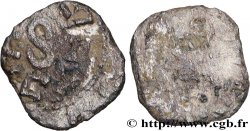
Ce denier est frappé sur un flan assez large et présente de hauts reliefs. Patine grise
N° en los catálogos de referencia :
Anverso
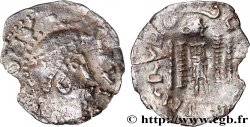
Descripción del anverso: Monogramme.
Reverso
Descripción del reverso: Croix ancrée.
Comentario
Ce denier est proche du Belfort 5671. Cette série est reprise par P. Schiesser dans son récent ouvrage sur le monnayage mérovingiens en argent, RT Sena n° 7, n° 49-51bis. Ce dernier remet en question l’attribution historique à Angers (cf. Monetae 1 pl. 7, p. 70) et met en valeur une “continuité visuelle” avec les deniers de Leugariaco. Depuis, nous avons montré que le monogramme du droit pourrait indiqué le monastère de Marmoutier. En effet, saint Martin se retira dans un ermitage à Marmoutier (actuellement Tours, au nord de la Loire). Un monastère y fut créé sur des ruines antiques. Il est bien attesté chez Grégoire de Tours (539-594) qui parle de “majus monasterium” (grand monastère). Ce monastère était autrefois en périphérie de Tours, d’où l’absence de référence à Tours (TVRONVS), mais la référence à Saint-Martin et au “grand monastère” par le biais du monogramme du droit. On retrouve en effet ce monogramme sur des deniers avec MOI SCI MARTIN (Monastère de saint Martin) et du monétaire Naudegiselo.
This denier is similar to Belfort 5671. This series is discussed by P. Schiesser in his recent work on Merovingian silver coinage, RT Sena no. 7, nos. 49-51bis. Schiesser challenges the historical attribution to Angers (cf. Monetae 1 pl. 7, p. 70) and highlights a “visual continuity” with the deniers of Leugariaco. Since then, we have shown that the monogram on the obverse could indicate the monastery of Marmoutier. Indeed, Saint Martin withdrew to a hermitage at Marmoutier (present-day Tours, north of the Loire). A monastery was established there on ancient ruins. It is well attested in Gregory of Tours (539-594), who speaks of a “majus monasterium” (great monastery). This monastery was once located on the outskirts of Tours, hence the absence of any reference to Tours (TVRONVS), but the reference to Saint Martin and the “great monastery” through the monogram on the obverse. This monogram is indeed found on coins bearing the inscription MOI SCI MARTIN (Monastery of Saint Martin) and the mint mark Naudegiselo.
This denier is similar to Belfort 5671. This series is discussed by P. Schiesser in his recent work on Merovingian silver coinage, RT Sena no. 7, nos. 49-51bis. Schiesser challenges the historical attribution to Angers (cf. Monetae 1 pl. 7, p. 70) and highlights a “visual continuity” with the deniers of Leugariaco. Since then, we have shown that the monogram on the obverse could indicate the monastery of Marmoutier. Indeed, Saint Martin withdrew to a hermitage at Marmoutier (present-day Tours, north of the Loire). A monastery was established there on ancient ruins. It is well attested in Gregory of Tours (539-594), who speaks of a “majus monasterium” (great monastery). This monastery was once located on the outskirts of Tours, hence the absence of any reference to Tours (TVRONVS), but the reference to Saint Martin and the “great monastery” through the monogram on the obverse. This monogram is indeed found on coins bearing the inscription MOI SCI MARTIN (Monastery of Saint Martin) and the mint mark Naudegiselo.
Historial
TOURS (TVRONVS CIVITAS)
(siglo VII)
El taller de Tours es uno de los lugares de producción importantes del período merovingio, con un lugar especial para la abadía de Saint-Martin y la iglesia catedral de Saint-Maurice. Durante un período de casi dos siglos, los autores han identificado 99 monedas (45 triens y 54 deniers) acuñadas para la ciudad, Saint-Martin y Saint-Maurice..
 Informar de un error
 Imprimir la página
 Comparte mi selección
 Haz una pregunta
 Consignar / vender
Artículos relacionados
 Descriptivo
Productos que has visto recientemente
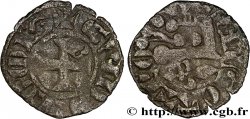
BLÉSOIS - COMTÉ DE BLOIS - GUI DE CHÂTILLON Obole BC+
500.00 €
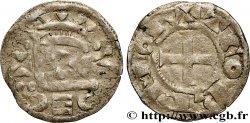
ROMORANTIN - COMTÉ DE ROMORANTIN - THIBAUT VI Denier BC+
330.00 €
ZEUGITANIA - CARTAGO Unité MBC
150.00 €

TOURS (TVRONVS CIVITAS) Denier MBC+
580.00 €

LOTES Lots de 5 monnaies lote
50.00 €
GRANDS MAGASINS JONES Timbre 5 Centimes EBC+
150.00 €
cgbfr.es numismàtica


